
Can You Sleep in Walmart Parking Lot? – Rules & Regulations


Ever wondered why some travelers effortlessly rest at big-box store lots while others get turned away? The answer isn’t as straightforward as you might think. While many assume these spaces offer universal overnight access, the reality hinges on a mix of property ownership, local laws, and management discretion.
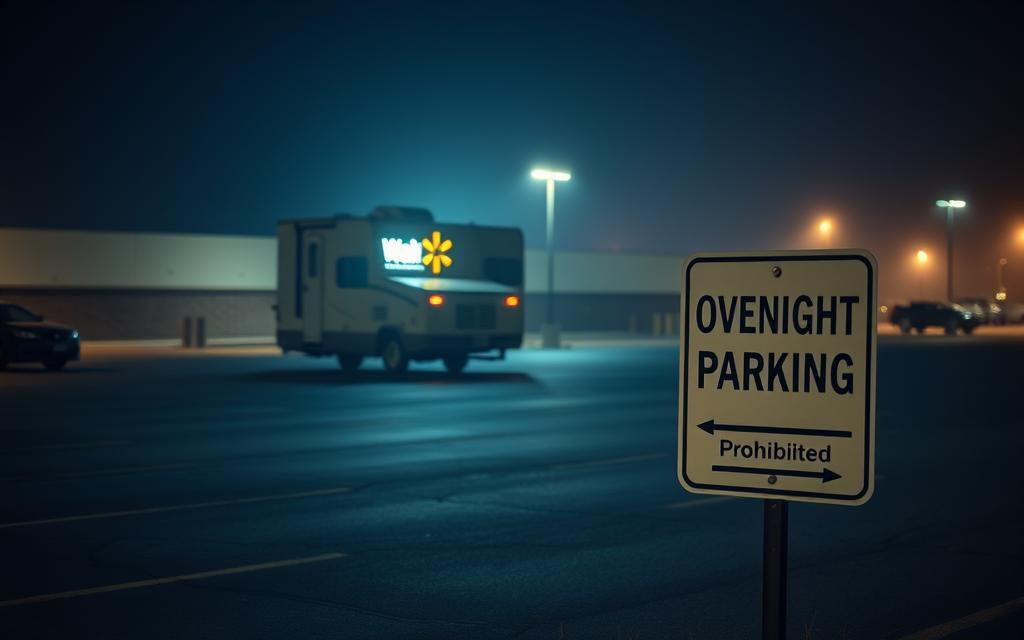
Walmart’s approach to overnight stays isn’t one-size-fits-all. Over 1,000 locations nationwide explicitly prohibit RV parking after dark. Why? Some stores lease their land from third-party landlords who set stricter rules. Municipal noise ordinances or zoning laws can also override corporate goodwill.
Regional differences play a huge role. A store in Arizona might welcome road-weary campers, while one in coastal California could ban vehicles after sunset. This patchwork system means you must confirm policies at each location rather than relying on hearsay or outdated online forums.
Interactive maps and apps now help travelers verify overnight statuses in real time. Yet nothing beats contacting the store directly—managers have final say. Misconceptions about nationwide bans persist, but the truth is simpler: flexibility varies by the hour, the neighborhood, and even the shopping center’s lease terms.
Key Takeaways
- Over 25% of Walmart stores restrict overnight RV stays
- Local ordinances and property owners often dictate parking rules
- Always verify policies with specific store management
- Digital tools help identify overnight-friendly locations
- No universal corporate ban exists despite common myths
Understanding Overnight Parking Policies at Walmart
Not all parking areas operate under the same guidelines after business hours. Three key elements shape whether vehicles can remain overnight: property ownership structures, municipal codes, and on-site decision-makers.
Lease Agreements Shape Availability
Approximately 30% of stores occupy leased land where landlords dictate terms. Shopping centers with multiple tenants often ban extended vehicle stays to maintain shared spaces. This explains why two stores in the same city might have opposing rules based on their leasing contracts.
How Local Laws Intervene
Coastal towns and suburban neighborhoods frequently enforce noise or zoning laws limiting overnight use. For example, Santa Monica prohibits all RV parking between 2-5 AM citywide. Always research municipal codes before arriving—a single ordinance can override corporate hospitality.
Store managers serve as final arbiters, even when corporate allows stays. Some enforce time limits or vehicle size restrictions for safety. Digital tools like RV Parky help identify welcoming locations, but a quick call to the service desk confirms real-time availability.
Can You Sleep in Walmart Parking Lot? Exploring Rules & Realities
Navigating overnight stays requires understanding shifting policies that change with staff rotations and regional priorities. Corporate guidelines grant location managers authority to modify rules based on safety concerns or community agreements.
Individual Store Manager Permissions
Managers often adjust policies hourly. A morning approval might reverse by evening if parking areas fill up. Some enforce 3-hour limits for RVs despite corporate suggestions. Others restrict trailers but permit compact vehicles.
Travelers report contradictory answers when calling the same store twice in one day. This occurs because multiple employees handle requests differently. Always verify with a duty manager during evening hours for accurate updates.
Policy Myths vs Documented Reality
Rumors about blanket bans circulate yearly, yet no nationwide prohibition exists. Recent social media claims about “2024 overnight parking termination” were debunked through corporate memos. Actual changes only occur at leased properties or towns passing new ordinances.
| Myth | Fact | Source |
|---|---|---|
| All locations ban overnight stays | 60% still allow with manager approval | Corporate FAQ |
| RVs always permitted | 38% of stores restrict vehicle length | RV Association Data |
| 24-hour access guaranteed | Local curfews override store rules | Municipal Codes |
Regional laws frequently impact availability. Coastal Florida stores face stricter regulations than Midwest locations. Always cross-check city websites before relying on store permissions.
Safety Tips and Best Practices for Overnight Parking
Smart preparation separates smooth experiences from stressful situations. Before arriving, prioritize confirming permissions and understanding site-specific limitations.
Planning Your Overnight Stay with Caution
Always contact store management during evening hours for current approvals. Policies shift based on staffing changes or vehicle capacity. Research municipal codes through city websites – some areas ban oversized vehicles entirely after dark.
Choose well-lit areas near security cameras when possible. Avoid blocking delivery zones or fire lanes. Keep essential items accessible in case relocation becomes necessary.
Utilizing Interactive Maps and Booking Resources
Digital tools like Walmart’s real-time status map help identify welcoming locations. Third-party platforms like Spot2Nite simplify finding campgrounds with verified amenities and reviews. These resources reduce guesswork when planning multi-day routes.
Compare backup options using apps that highlight rest stops or RV-friendly businesses nearby. While some lots permit temporary stays, dedicated camping accommodations often provide safer conditions with water access and waste disposal.
Remember: flexibility remains critical. Even confirmed permissions can change due to unexpected events. Maintain a list of alternative sites within 30 miles for last-minute adjustments.
Conclusion
Overnight stays at retail locations depend on a web of factors beyond corporate policies. Property leases, municipal codes, and manager discretion create a patchwork of rules that change across states—or even neighboring stores. Always confirm permissions directly with staff, as approvals can shift daily based on parking capacity or local events.
Digital tools like real-time maps simplify identifying welcoming sites, but they’re no substitute for direct communication. Travelers should cross-reference apps with city ordinances and backup options. While rumors of blanket bans persist, most restrictions stem from leased properties or updated community laws.
Recent enforcement actions highlight the risks of assuming universal access. Prioritize well-lit areas, respect posted guidelines, and explore dedicated camping accommodations when possible. A proactive approach ensures compliance and safety, turning unpredictable stops into stress-free solutions for road-weary adventurers.
Can you sleep in a Walmart parking lot? Learn about the rules, regulations, and safety tips for overnight stays.