
What Is a Contingency Fee Lawyer? Pay Only If You Win.


Ever thought about how people get great lawyers when they’re broke? What if you could get a top lawyer without paying first?
A contingency fee lawyer is a game-changer. They let you fight for justice without spending money upfront. The deal is simple: they only get paid if you win your case.
These lawyers focus on cases like personal injury and employment disputes. They help when you can’t afford to pay by the hour.
Unlike regular lawyers, contingency fee lawyers put everything into your case. They bet on winning, so they really want to succeed for you.
Key Takeaways
- Contingency fee lawyers are paid only after winning a case
- No upfront legal fees required
- Attorneys receive a percentage of the recovered amount
- Provides access to legal representation for those with limited finances
- Lawyers are financially motivated to win your case
Understanding Contingency Fees
Legal problems can be scary and expensive. Contingency fees help people get justice without paying first. This way, more people can get legal help.
A contingency fee means lawyers only get paid if you win. This is different from paying by the hour. It makes sure the lawyer works hard for you.
Definition of Contingency Fee
With a contingency fee, you don’t pay your lawyer first. They get a part of what you win. This is usually between 33% and 40%.
Advantages of Contingency Fee Arrangements
- Eliminates upfront legal expenses
- Provides access to quality legal representation
- Motivates lawyers to maximize case value
- Reduces financial risk for clients
Common Misconceptions
Some think contingency fees are too high. But, they really help people get legal help who can’t afford it.
It’s important to know the details of your agreement. Talk to your lawyer about fees. This way, you both understand each other.
Who Should Consider a Contingency Fee Lawyer?
Legal problems can be very hard on your wallet, even more so if you can’t work because of injuries or disputes. A no win no fee attorney can be a big help. They offer a way to fight legal battles without needing a lot of money upfront.
Some legal issues are perfect for a payment plan with an injury lawyer. Knowing when to use this option can help you decide if you should take legal action.
Personal Injury Cases
Personal injury cases are a big reason people use a percentage based lawyer. People hurt in accidents often have to deal with:
- Big medical bills
- Not being able to work and losing money
- Costs for long-term care
Employment Disputes
Workers facing job problems like discrimination or being fired unfairly might find help with a contingency fee lawyer. These cases usually involve:
- Going up against big employers
- Dealing with lots of legal papers
- Trying to get back a lot of money
Medical Malpractice Cases
Medical mistakes are hard to fight because they cost a lot. A no win no fee deal lets patients fight for justice without worrying about money right away. These cases need a lot of expert witnesses and complicated legal steps.
People who don’t have a lot of money can get good legal help. This way, everyone can try to get fair compensation and justice.
How Contingency Fee Agreements Work
Legal fees can be hard to understand, like in personal injury cases. A contingency agreement lawyer helps by making it easier for clients to get justice without a big upfront cost.
With contingent representation, lawyers get paid only if they win your case. This way, people who can’t pay for lawyers upfront can get help. It makes good legal help more available.
Initial Consultation and Agreement
In the first meeting, lawyers check if your case is strong. They look at:
- Strength of legal claim
- Potential financial recovery
- Complexity of the legal challenge
- Estimated time investment
Percentage of Recovery
Legal fees for personal injury cases are based on the settlement or award. They can be 33% to 40% of the total. This depends on how hard the case is and the risk involved.
Expenses and Fees Explanation
A good contingency agreement lists all costs, like:
- Court filing fees
- Expert witness costs
- Investigation expenses
- Administrative charges
Being clear about costs is important. It helps clients know what they might pay before they start.
Types of Cases Typically Handled
Contingency fee lawyers help with many complex legal issues. They have a special way of getting paid. This makes it easier for people to get legal help who might not be able to afford it.

Looking for a lawyer who doesn’t charge upfront? There are many case types that might qualify. You only pay if your case wins.
Civil Rights Violations
Civil rights cases are a big area for these lawyers. They handle:
- Discrimination at work
- Housing rights issues
- Unfair arrests
- Broken constitutional rights
Class Action Lawsuits
Class action lawsuits let many people fight together. They often deal with:
- Consumer rights
- Environmental harm
- Bad products
- Company wrongdoings
Product Liability Cases
Product liability is another key area. Lawyers look into:
| Product Category | Common Issues |
|---|---|
| Medical Devices | Faulty design, not enough testing |
| Consumer Electronics | Design flaws, safety risks |
| Automotive Components | Design mistakes, manufacturing errors |
These cases show how flexible contingency fees are. They help fight for justice in many areas.
Benefits of Hiring a Contingency Fee Lawyer
Legal problems can be scary and expensive. A contingency fee lawyer helps people fight for justice without spending a lot of money first. This way, getting legal help is easier for many people.
Reduced Financial Risk
Contingency fee lawyers make it easier to start a lawsuit. You don’t pay unless you win. This means:
- Zero upfront legal fees
- No out-of-pocket expenses during litigation
- Protection against financial loss if the case is unsuccessful
Access to Quality Legal Representation
Lawyers who take a cut of the settlement work hard for you. They want to win big. Even those who can’t afford lawyers get great help.
Incentives for Lawyers
Lawyers in contingency cases work hard because they can win big. They get paid based on how well they do. This means they:
- Investigate cases well
- Make strong plans
- Work hard to get you the most money
This way, lawyers really care about winning for you.
Drawbacks of Contingency Fee Arrangements
Contingency fee arrangements have good points, but they also have downsides. The way lawyers get paid can affect your case and money. It’s key to think about these things before deciding.
Looking into the fee structure for personal injury cases is important. You need to know the limits and risks of these agreements.
Higher Costs in Successful Cases
Lawyers with contingency fees take a cut of your winnings. This means you might pay more if you win big. It’s different from paying by the hour.
- Percentages range from 33% to 40% of recovered funds
- Complex cases might involve additional percentage increases
- Large settlements can translate to substantial attorney fees
Potential for Limited Legal Services
Some lawyers might want to settle fast to make more money. This could mean they don’t work as hard on your case. It’s not always the best for you.
- Rapid settlements might not maximize client compensation
- Less motivation for extensive case preparation
- Potential compromise of thorough legal investigation
Fee Variability Across Different Cases
How complex your case is can change how much you pay. The fees can vary a lot. It depends on the case and the lawyer.
It’s important to read your agreement carefully. Not all cases are the same, and fees can differ a lot.
How to Choose the Right Contingency Fee Lawyer
Finding the right lawyer on contingency needs careful thought. You must do research to find a skilled lawyer. This choice can greatly affect your case’s success.
To find a good contingency billing lawyer, start with trusted sources. Ask friends, join professional groups, and check with state bar associations. They can tell you about a lawyer’s past work.
Research Strategies
- Check online reviews and ratings
- Verify lawyer’s specialized experience
- Review professional credentials
- Examine past case outcomes
Critical Consultation Questions
At your first meeting, have a list of questions ready. This will help you see if the lawyer is right for you:
- What is your experience with similar cases?
- What percentage will you charge upon winning?
- Do you cover upfront litigation expenses?
- How often will you communicate case updates?
Evaluating Case Outcomes
Past performance can be an indicator of future success. Ask for details on previous cases. Look at settlement rates and trial wins. A good lawyer will share their history and show success in contingency cases.
Choosing the right contingency fee lawyer is key. You want someone who knows law well and fits your case needs.
The Legal Process in Contingency Cases
Working with a contingency based lawyer is a structured way to protect you. It also helps avoid big upfront costs. Knowing the legal process can make you feel more confident in your case.
With a contingency fee lawyer, you’ll go through a detailed legal journey. It includes these main steps:
- Initial Case Evaluation
- Evidence Gathering
- Formal Legal Filing
- Negotiation Phase
- Potential Trial Proceedings
Filing a Lawsuit
The first big step is filing legal papers. Your lawyer will write a detailed complaint. It will explain why you’re suing, what damages you’ve suffered, and why.
Negotiation Process
Most cases settle before going to court. Your lawyer will talk to the other side to get a good deal. Good negotiation can lead to a win without going to court.
Trial Considerations
If talks fail, your lawyer will get ready for trial. They’ll prepare evidence, line up witnesses, and make a strong case for you.
Remember, contingency fees mean your lawyer works hard for you. They get paid if you win, so they want to win too.
Ethical Considerations for Contingency Fee Lawyers
Working in law means following strict rules. This is true for lawyers who only get paid if they win. They must always be honest and fair.
Being honest is key for lawyers who work on a no win no fee basis. They need to talk clearly with their clients. This way, clients know what’s happening with their case.
Transparency in Client Communications
Good lawyers talk openly with their clients. They do this by:
- Telling clients how they will be paid
- Sharing what might happen in the case
- Keeping in touch with clients all the time
Responsibility in Fee Calculations
Figuring out fees needs careful work. Good lawyers make sure fees are fair and clear This helps both the client and the lawyer.
Important things to think about include:
- Calculating fees correctly
- Keeping track of all costs
- Staying away from problems that could hurt the case
Rules for lawyers help keep things fair in cases where they only get paid if they win. Lawyers must always act with integrity. This way, clients get the best help possible.
Common Questions About Contingency Fees
Understanding how lawyers charge for injury cases can be tricky. Contingency fees often lead to many questions for those seeking legal help.

Exploring a contingent fee contract, clients usually want clear answers. They want to know about their legal journey ahead.
How Long Do Cases Take?
Legal cases can last from months to years. Several things affect how long a case takes. These include:
- How complex the case is
- How much evidence is needed
- When the court can schedule it
- If both sides are willing to talk
What Happens If I Lose?
Usually, you don’t pay lawyer fees if you lose. This setup protects you from losing money. But, you might have to pay for some costs like court fees or expert witness fees.
Can Fees Vary by State?
Lawyer fees for contingency cases can change by state. Most charge between 33% to 40% of what you get back. Some states have rules to keep fees fair for clients.
Knowing these details helps clients choose the right lawyer. This is important when using contingency fees.
State Regulations on Contingency Fees
Understanding contingency fees needs knowing the rules that change in each state. Lawyers who work on a percentage basis must follow rules that help both them and their clients.
State rules are key in setting up how legal fees work in personal injury cases. Each place has its own way of handling agreements about contingency fees.
Variations Across Different States
Looking at state rules shows how complex they can be. Some main differences include:
- Different maximum percentage caps for attorney fees
- Sliding scale fee structures
- Specific disclosure requirements
- Restrictions on certain types of cases
Fee Caps and Limitations
States have different ways to control legal fees in personal injury cases. Here’s a detailed look at the differences:
| State | Maximum Contingency Fee | Special Provisions |
|---|---|---|
| California | 40% | Sliding scale for larger settlements |
| New York | 33.33% | Additional court approval for medical malpractice |
| Texas | 45% | Strict documentation requirements |
State Bar Association Guidelines
State bar associations watch over contingency fee deals. Ethical rules and protecting clients are top priorities. Lawyers must follow these rules closely to stay professional and legal.
People looking for a lawyer should check their state’s rules. This helps them understand contingency fee deals better.
Alternative Fee Structures
Legal help comes in many ways, not just contingency agreements. A lawyer knows clients want choices for legal costs. Each fee type has its own good points for those looking for legal help.
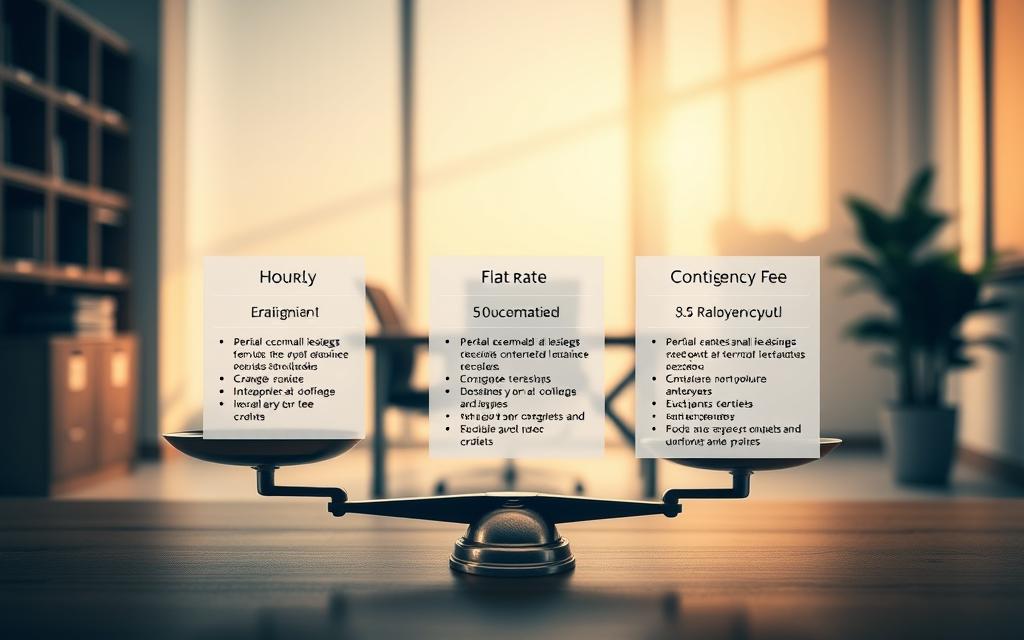
There are many ways to pay for legal help. Each has its own benefits and things to think about. Knowing these helps people choose wisely when they look for a free consultation injury lawyer.
Hourly Fees: Traditional Billing Method
Hourly billing is a common way lawyers charge. They bill based on how much time they spend on a case. This way is clear but can make it hard to guess the total cost.
- Tracked in incremental time units
- Detailed billing statements
- Suitable for complex legal matters
Flat Fee Arrangements
Flat fees mean you know exactly how much you’ll pay for certain legal services. You pay a set amount for a service, so there are no surprises.
| Service Type | Typical Flat Fee Range |
|---|---|
| Simple Contract Review | $500 – $1,500 |
| Uncontested Divorce | $1,000 – $3,000 |
| Will Preparation | $300 – $1,000 |
Retainer Agreements
With retainer agreements, you pay a fee upfront to have a lawyer ready for you. This way, you get ongoing support for complex issues.
- Advance payment for future services
- Ensures lawyer’s availability
- Common in business and ongoing legal representation
Every fee type has its own advantages. It’s smart to talk to your lawyer about what works best for your case.
Real-Life Examples of Contingency Fee Cases
Contingency fee lawyers help people get justice they can’t afford. They show how lawyers get paid after winning a case. This helps people get the money they deserve.
Many big cases show how important contingency fee lawyers are. They help win big victories for their clients.
- Tobacco Industry Litigation: Attorneys took a big cut of the settlement. This helped challenge big companies.
- Medical Malpractice Claims: Victims got a lot of money thanks to these lawyers.
- Environmental Damage Lawsuits: These cases were fought without upfront costs to the plaintiffs.
Notable Lawsuit Outcomes
Looking at successful cases, we see why contingency fees are worth it. These cases often bring big wins for those who couldn’t afford to fight.
| Case Type | Average Settlement | Lawyer’s Contingency Fee |
|---|---|---|
| Personal Injury | $250,000 | 33-40% |
| Medical Malpractice | $500,000 | 40-45% |
| Employment Discrimination | $150,000 | 30-35% |
Broader Legal Implications
These cases show how contingency fees make law more accessible. Attorneys invest a lot of time and money. They take risks to help those who can’t pay upfront.
By taking cases on contingency, lawyers help people fight big powers. They get the justice they deserve. This changes the legal world for regular people.
Conclusion: Is a Contingency Fee Lawyer Right for You?
Legal problems can be hard, and money can be tight. A contingency fee lawyer might help. They work for free until you win, helping those who can’t pay upfront.
Thinking about a contingency fee lawyer? It’s not for every case. Cases like personal injury, work disputes, and medical mistakes are good fits. You need to think about your case’s chances of winning and how much money you might get.
Looking for a lawyer? Check out several who know your type of case. Talk about how they get paid and what extra costs might be. A good lawyer will explain everything clearly, helping you decide if it’s right for you.
A contingency fee lawyer might be perfect if you have a strong case but can’t pay. By looking at your case and talking to lawyers, you can choose wisely. This way, you might win your case and get the help you need.
Learn what is a contingency fee lawyer and how they work on a “no win, no fee” basis. Discover the benefits of hiring a lawyer who only gets paid when you win your case.